2026 State of the Industry report: Shopping centre gift card trends in Europe

This report presents the findings of a first-of-its-kind international research project specifically dedicated to uncovering consumer perceptions of shopping centre gift cards.
Introduction
The findings in this inaugural State of the Industry report show that shopping centre gift cards are already a popular choice for many European consumers, offering a level of flexibility that single-retailer cards cannot match. What stands out immediately is that while current usage is strong, the appetite for these multi-retailer options is much larger than current sales figures suggest.
We conducted this survey of 7,500 consumers across nine European markets, the largest ever of its kind to look specifically at shopping centre gift cards, to better understand consumer appetite for and attitudes towards these gift cards.
What comes through clearly in the data is a significant gap in awareness rather than a lack of consumer interest. Over half of shoppers who currently do not buy shopping centre gift cards would be eager to do so if they were simply made aware of their existence.
This research highlights a major commercial opportunity. Shopping centre gift cards are much more than an administrative convenience; they are a strategic tool for driving footfall, boosting tenant revenues, and building long-term shopper loyalty. The destinations that prioritise visibility and seamless in-store acceptance are the ones perfectly positioned to capitalise on this growing demand.
{{quote}}

Key findings
Among the main findings of the report were the following trends and stats.
1. Massive untapped awareness
Most consumers (61%) already use shopping centre gift cards. Among the rest, over half say they would buy one if they simply knew they existed.
2. Flexibility the key benefit of shopping centre cards
54% of shoppers prefer cards that work across all retailers in a centre, valuing variety over specific brand loyalty.
3. The 30–44 sweet spot
This demographic is the most engaged, aware, and optimistic about shopping centre gift cards and their value.
4. Visibility is the primary barrier
The biggest hurdle to growth in gift card sales is that consumers don't always know about the cards, where to buy them or which stores accept them.
5. Exceptional satisfaction rates
Once a consumer actually uses a shopping centre gift card, satisfaction is incredibly high (86%+), leading to a high likelihood of repeat purchases.
6. The overspend magnet
Gift cards are proven revenue drivers of overspend, with 83% of shopping centre gift card users spending more than the card’s original value.
7. Demand growing for digital
Buyers want the convenience of purchasing online (52%), with 41% revealing that their last gift card purchase was digital.
8. Win merchants over to win big
Onboarding all your stores and ensuring their staff are trained on how to process your gift cards will remove key frictions in the consumer journey.
9. Consumers see real value in shopping centre cards
92% who have used a shopping centre gift card believe they offer better value than other types of gift cards.
10. Cards drive guaranteed footfall
The vast majority (83%) of consumers who use shopping centre gift cards are likely to purchase again within the next 12 months.

Strong consumer interest
Shopping centre gift cards enjoy high levels of awareness across the surveyed markets. Overall, 61% of consumers report having used one, while an additional 27% are aware of them but have not yet made a purchase.
The highest usage rates are seen in the UK (72%) and Sweden (70%). Conversely, the Netherlands shows the lowest awareness, with 29% of respondents admitting they were not aware of shopping centre gift cards prior to the survey.
In a trend that holds true across nearly all survey questions, 30-44-year-olds lead the way as the most engaged and aware demographic, followed by the 18-29 age group. After that, awareness and usage decline with age.
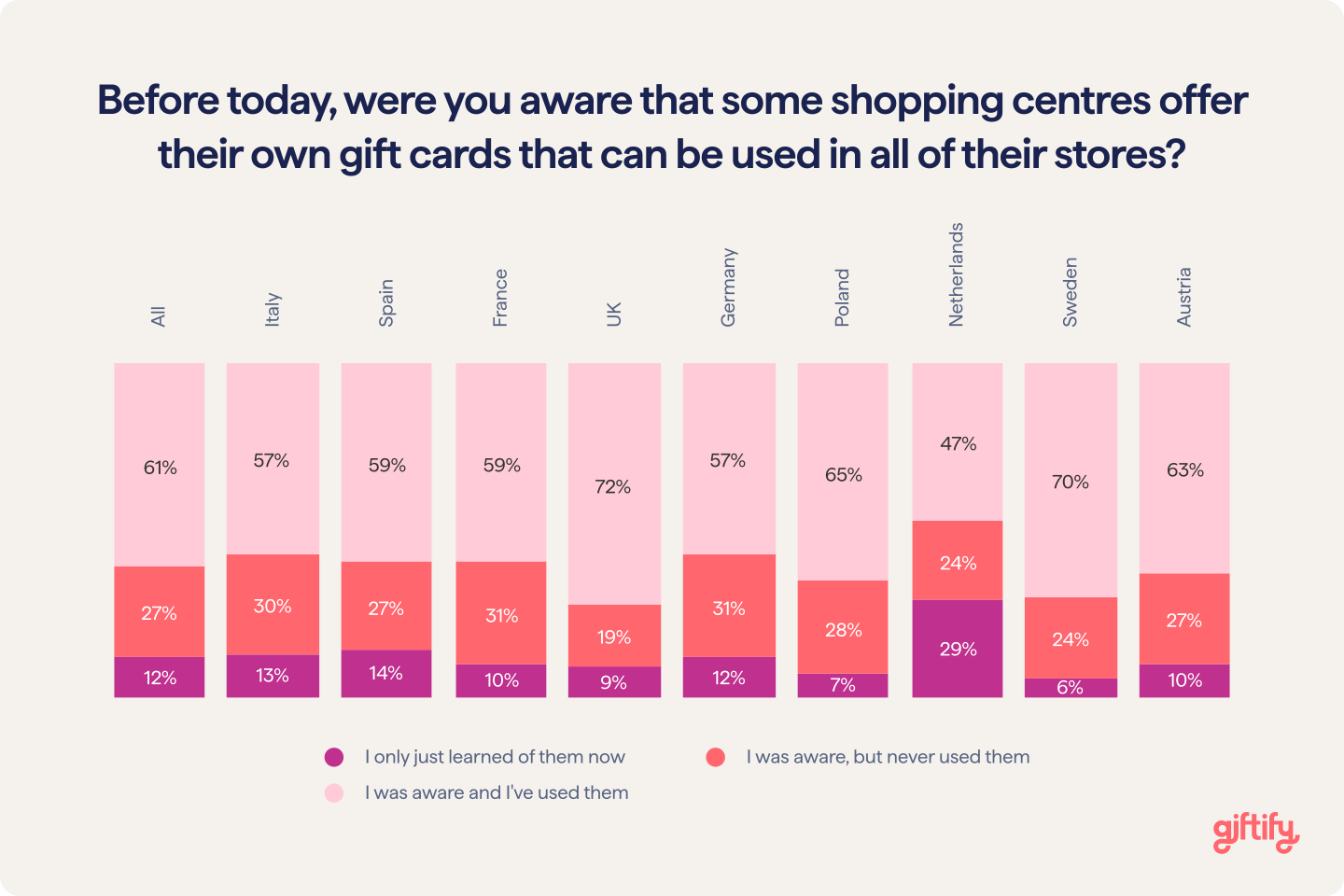
Among users, 20% frequently purchase shopping centre gift cards, 51% occasionally buy them, and 24% rarely do.
The UK shows a significant lead, with 34% of users often buying these cards, substantially higher than Sweden (10%) and Austria (12%). The Netherlands presents an outlier, recording the highest percentage (9%) of aware consumers who report never purchasing these gift cards.
Preference for flexible gift cards
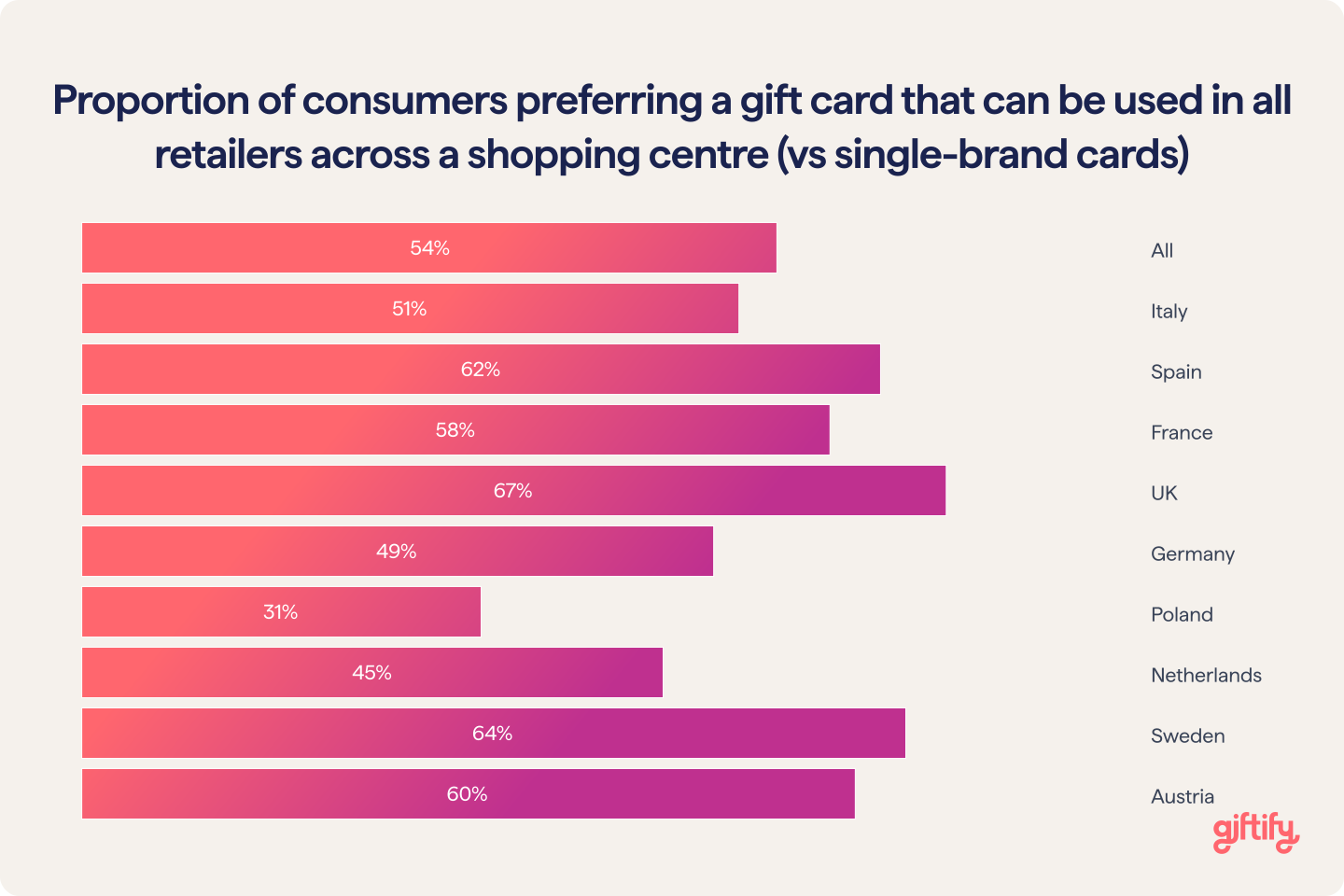
A majority of consumers (54%) favour gift cards that are accepted by all retailers within a shopping centre, indicating a preference for flexibility. This desire for multi-retailer shopping centre gift cards is most pronounced among UK consumers (67%) and younger shoppers.
Sales barriers remain
Yet, there is a discrepancy between consumer preferences and purchases, with a greater share claiming they’ve bought single-brand cards (70%) than shopping centre cards (54%).
This is at odds with the fact that flexibility (62%) is ranked by consumers ahead of brand (54%) when asked what matters most to them during a gift card purchase.
If they prefer cards accepted at multiple retailers and place more importance on flexibility than brand, why aren’t sales of shopping centre cards higher?
The biggest barrier to growth identified in the survey is insufficient promotion leading to a lack of visibility.
Consumers understand single-brand gift cards and their acceptance criteria is obvious.
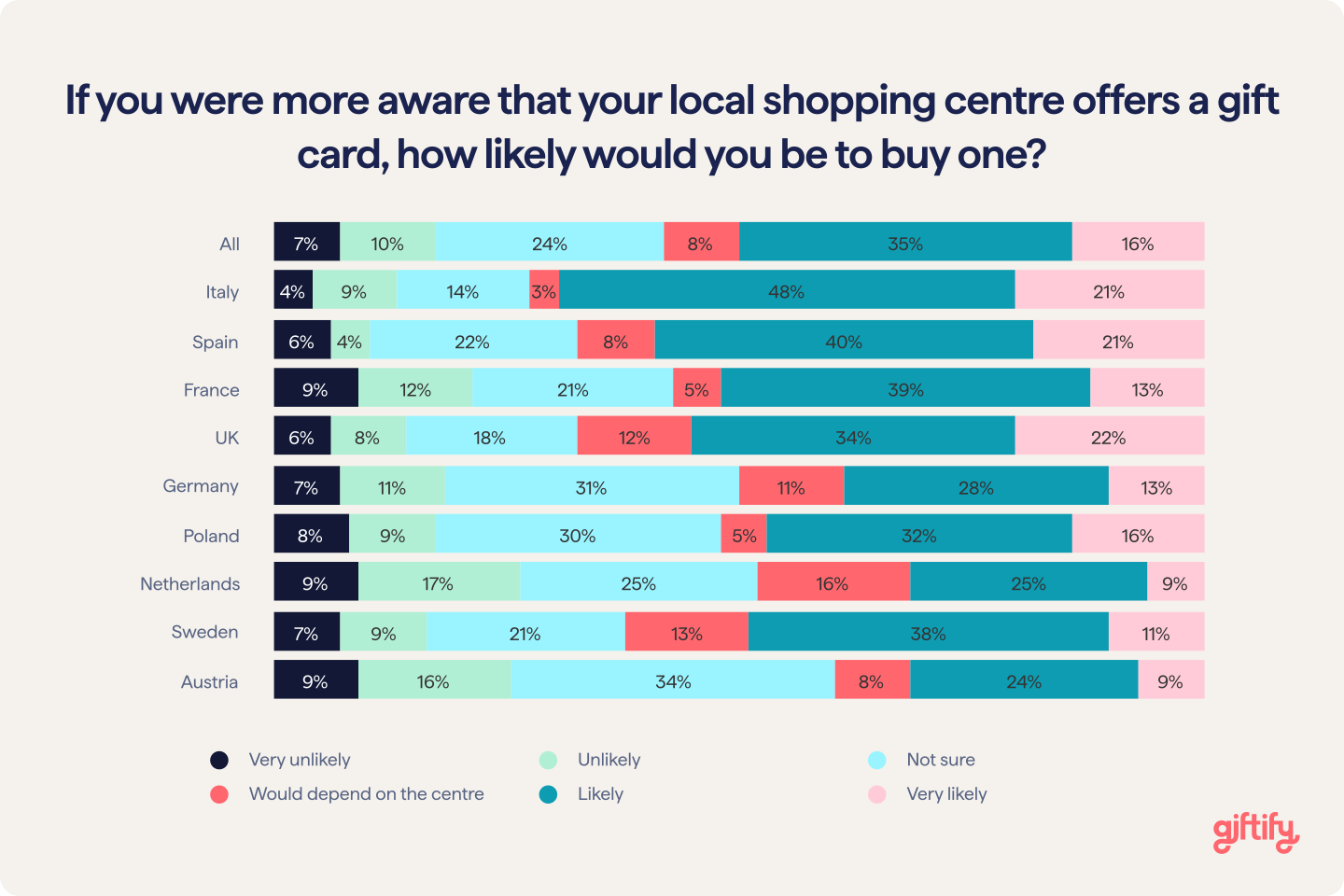
For shopping centre cards, this is not always the case. Over half (51%) of the non-user group indicated they would be likely or very likely to buy shopping centre gift cards if they had greater awareness of their availability.
Visibility drives sales
So far, we see the primary obstacle to sales growth for shopping centres is the visibility of their programmes.
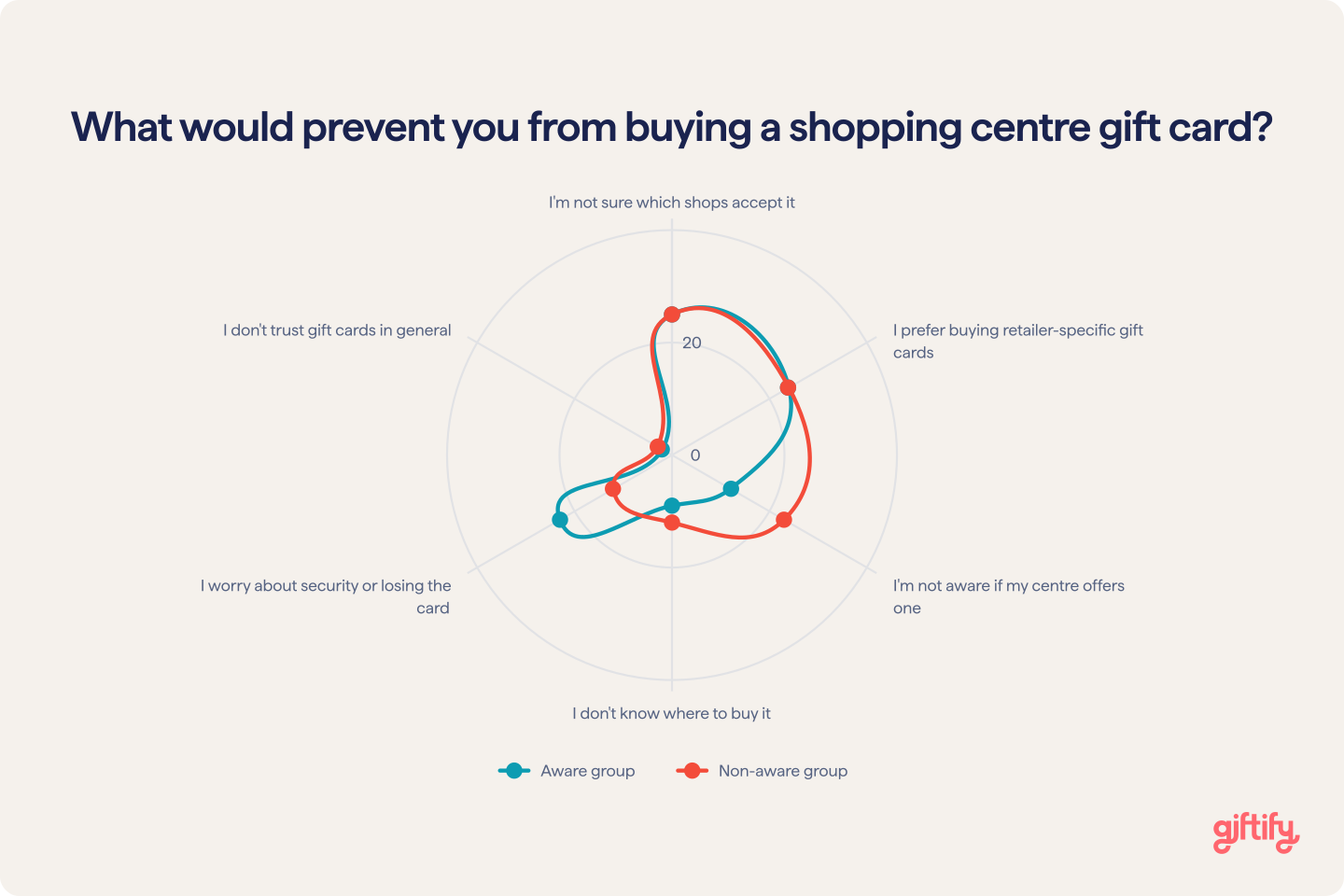
Consumers said their number-one cause of hesitation is not knowing which stores accept these cards.
For the non-users, confusion (23%) over whether their local shopping centres even provide a gift card programme is another key barrier to purchase.
Even among recipients, a lack of clarity around acceptance and availability remains, with store eligibility (25%), retail staff awareness (22%), and unexpected declines (18%) the most common complaints.
Differences in shopping barriers persist across age groups. Consumers aged 60–74 are more cautious and tend to favour single-brand cards.
By contrast, younger shoppers (18–34 and 35–44) are primarily concerned with informational challenges, specifically the uncertainty regarding where certain cards are accepted in stores.
Clear information and strong promotion drive interest
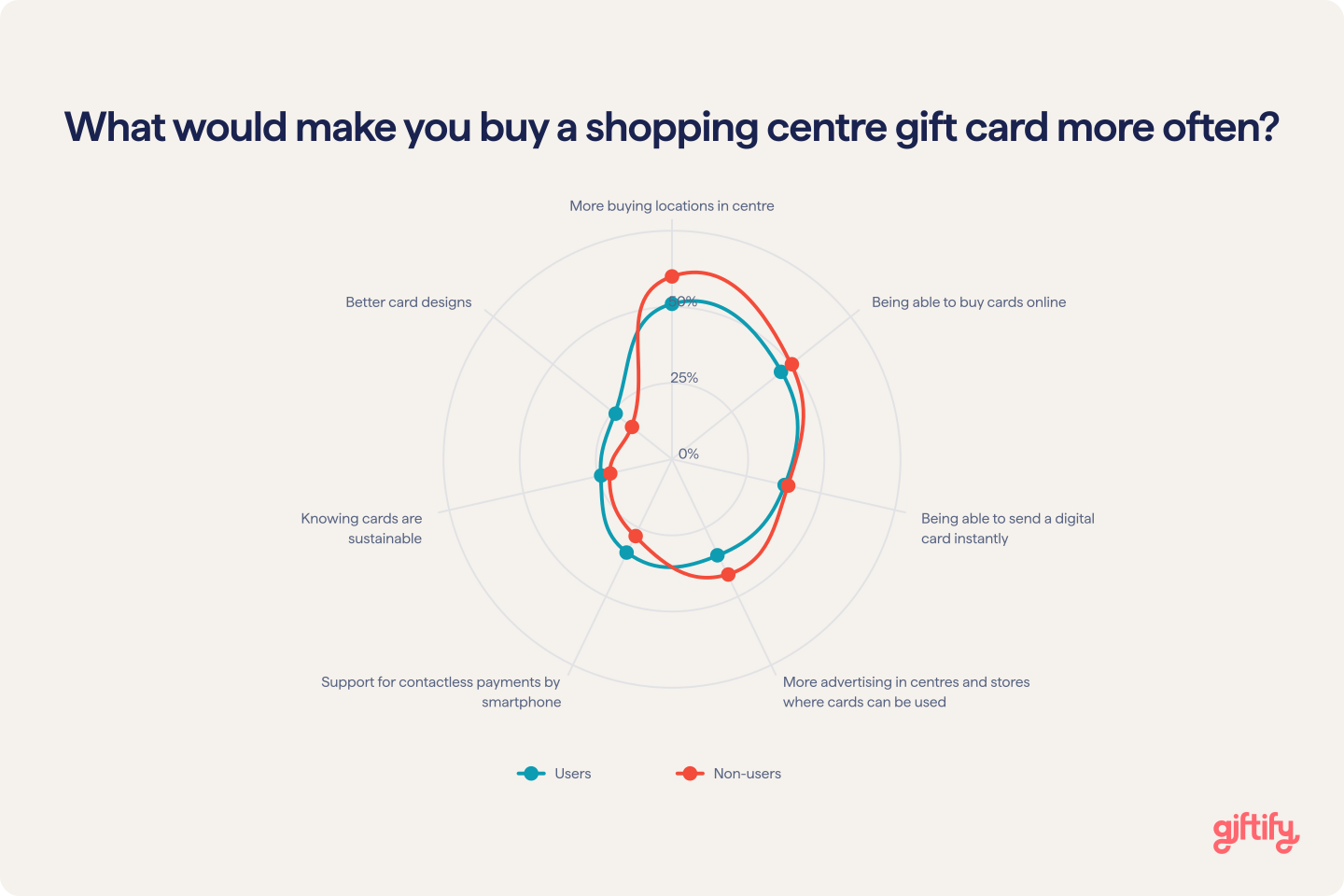
Visibility is clearly the strongest driver for growing gift card sales, with 51% of users and 60% of non-users agreeing more buying locations in centres would increase their likelihood of a purchase.
Being able to purchase cards online is the second-most important driver for both groups, at 46% and 50% respectively, while non-users prioritise more advertising in centres and eligible stores (42%).
Regionally, 'more buying locations' is the top driver for shopping centre gift card user in Austria, France, Sweden, Germany and Spain; while the UK and Poland prefer being able to buy online.
It's not surprising to see consumers in the Netherlands prefer to see 'more advertising’ in centres and stores accepting the cards.
Again, this data underscores a core principle for shopping centres: that greater awareness and acceptance correlate with higher purchase intent.
After all, as we've already seen, 51% of shoppers who haven’t previously used shopping centre gift cards would be likely or very likely to buy one if they were made more aware that their centre has a programme.
Growing your gift card sales
Based on this data, the advice for shopping centres is clear: Increase visibility of your programme and ensure acceptance across stores to drive gift card sales.
Centres should make it clear where gift cards can be purchased and highlight participation of stores in the gift card programme, especially for anchor tenants.
It's important to carefully consider the right channels for effective promotion.
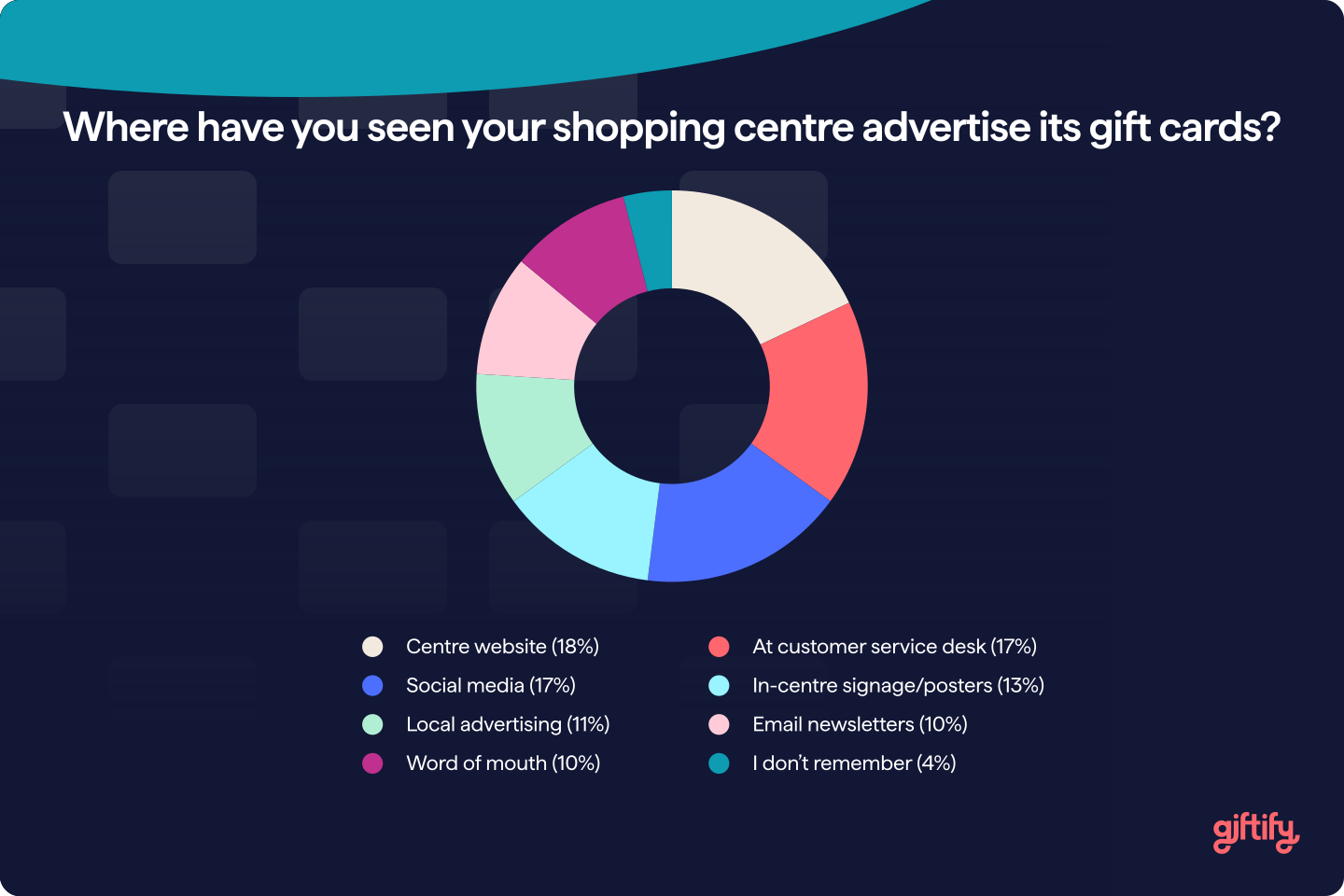
Shopping centre websites (18%), social media (17%) and customer service desk teams (17%) are typically the most effective channels for driving awareness of programmes.
But there are some important regional and demographic differences. For example...
- Word of mouth is a major channel in France (17%), but almost non-existent in Poland (2%)
- Customer service desks are the most visible touchpoint in Poland (24%) and Austria (19%), but among the least utilised in the Netherlands (10%)
- On the other hand, in-centre signage is only responsible for 3% of visibility in Poland, compared with 20% in Sweden
- Local advertising is least visible in Spain (8%), the UK (9%) and France (9%)
- In-store channels (customer service desk, signage), are most influential for the 60-74 age group, while 18-29s and 30-44s are more reliant on social media and online ads for visibility
Contact us for more stats and insights about your local market
Satisfaction high among users
Some 92% of consumers who have used a shopping centre gift card believe they offer similar or better value compared to other types of gift card, with 41% citing ‘better value’ or ‘much better value’.
This positive value perception is strongest in the UK, where 41% believe they provide better and 23% much better value, and Germany, where the figures are 38% and 11% respectively.
In France and the Netherlands, shopping centres have the biggest opportunity to showcase the value of their gift cards to consumers. Some 15% and 11% of consumers in these markets view gift cards as offering worse or much worse value.
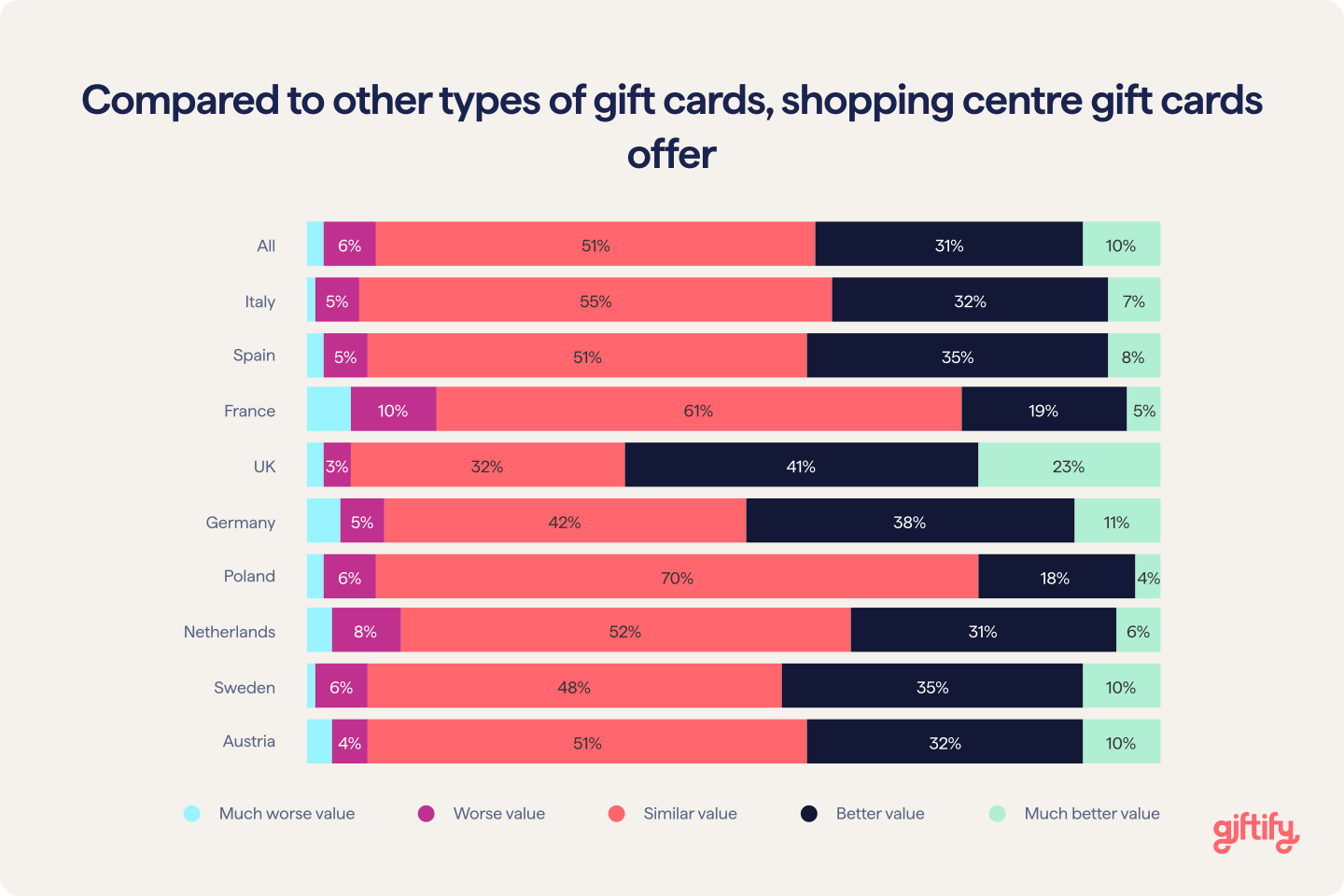
The 30–44 age group is the most optimistic about the value of shopping centre gift cards (46% consider them better or much better value). In contrast, 60–74s are the most skeptical, with only 33% believing they offer better or much better value.
Buyers and recipients are equally satisfied
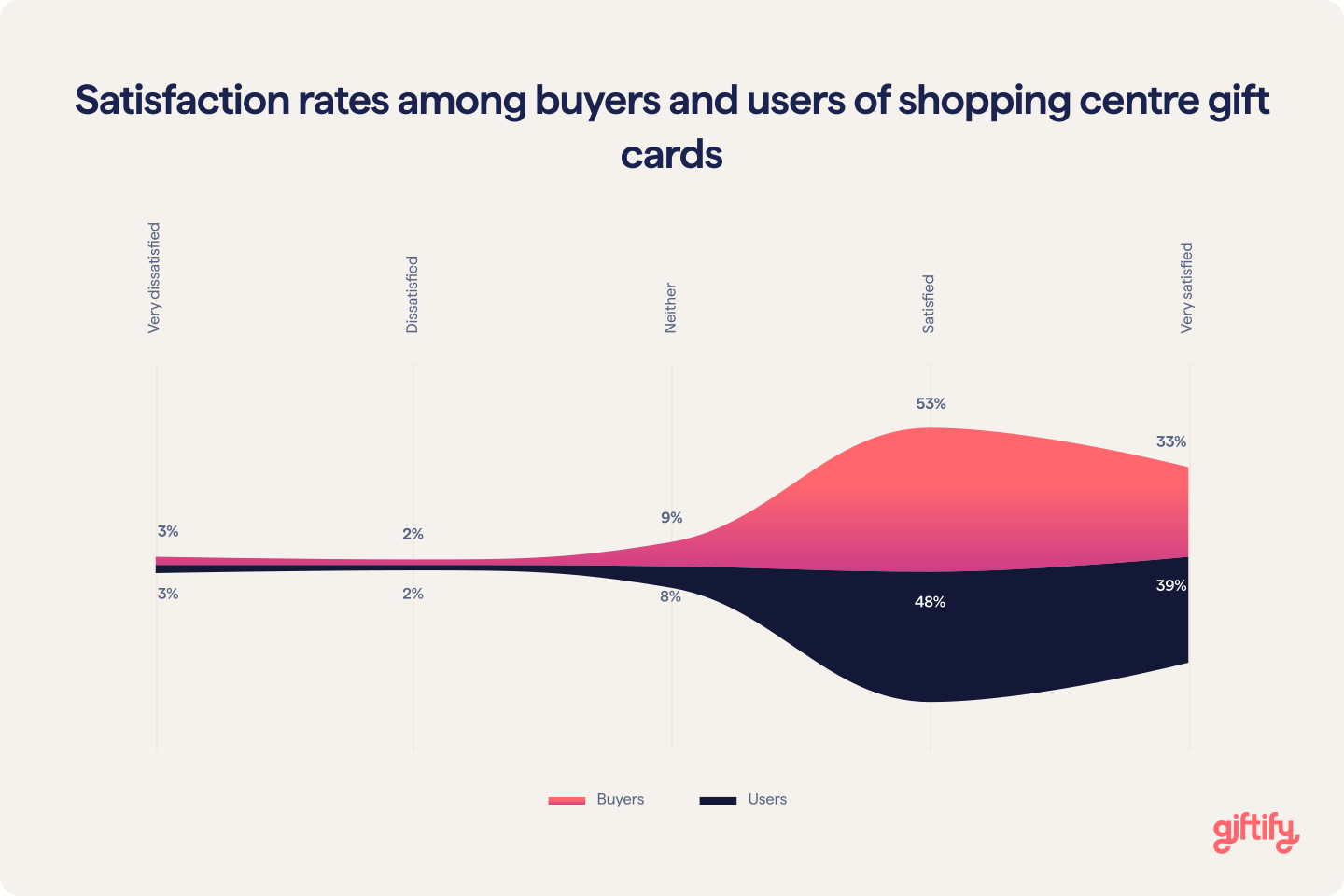
Some 86% buying and 87% using a shopping centre gift card were satisfied or very satisfied with the experience.
Overall sentiment was overwhelmingly positive across all markets. The highest degree of positivity was seen in the UK for both purchase (95%) and usage (96%).
Although they were the least positive for purchases and usage respectively, both France (80%) and Austria (78%) still demonstrated extremely high levels of satisfaction.
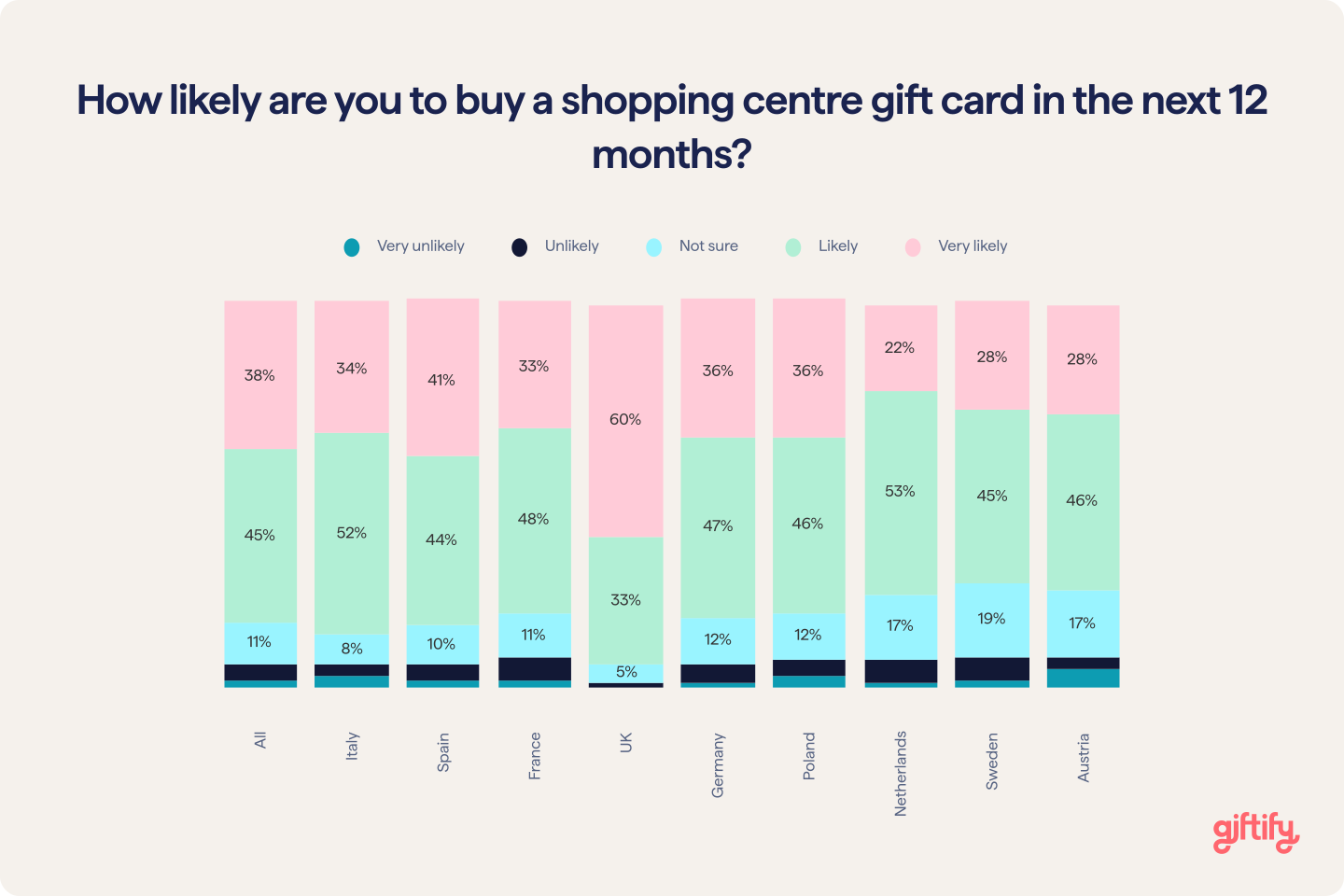
High satisfaction correlates strongly with repeat purchase intent. The majority (83%) who have used a shopping centre gift card are likely or very likely to buy another in thenext 12 months.
In the UK, this figure is particularly high at 93%, with a remarkable 60% claiming to be very likely to make a repeat purchase within the next year.
Uncertainty over acceptance causing some friction
Where dissatisfaction does exist, it mainly relates to the same lack of clarity around the acceptance criteria of these gift cards, or operational issues.
While 44% claimed nothing felt difficult when buying a shopping centre gift card, the main challenges facing the remaining cohort were queues or waiting times (12%), limited or inconvenient opening hours (11%) and difficulty finding where to buy (9%).
The perception of difficulty bears witness to another generational divide. Only 32% of those aged 18-29 reported that nothing felt difficult, compared with 39% of 30-44 year-olds, 56% of 45-59 year-olds, and 73% of 60-74 year-olds.
The biggest complaint in the 18-29 age group was inconvenient opening hours (14%), while those aged 60-74 were most put off by queue or wait times (8%).
More in-store points of sale, online promotion, onboarding of eligible stores, and awareness among retail staff will help to further enhance the gift card experience for purchasers and recipients alike.
Rising digital demand
Purchasers expect online options
More than half (52%) consider it important and 22% very important that they are able to purchase gift cards instantly online. And 41% also say that the last gift card purchase they made was digital.
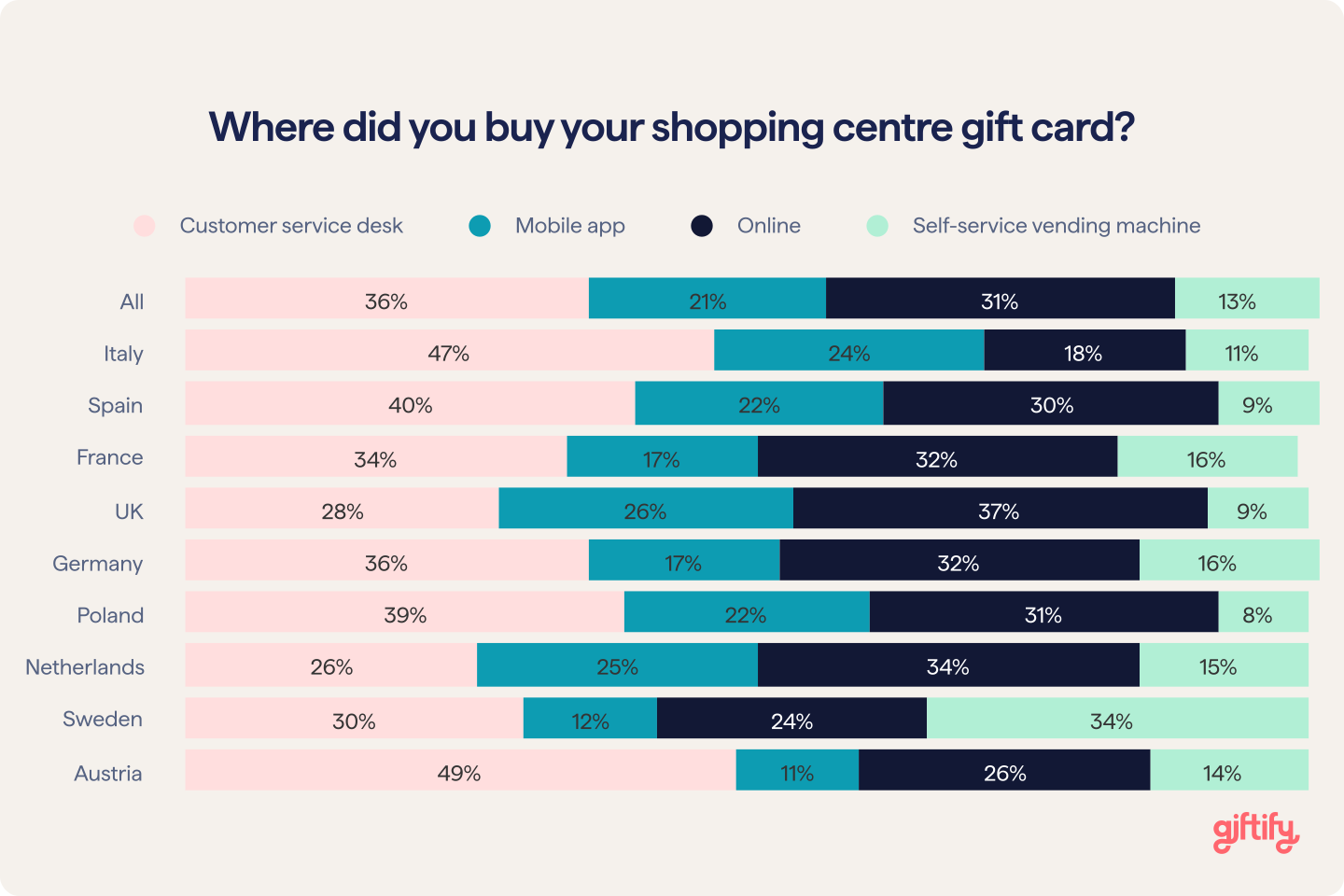
Online now makes up over half of shopping centre gift card sales, with 31% bought from a website and 21% by app. In contrast, 36% are purchased in centre face-to-face and 13% from a self-service vending machine.
But physical cards still reign supreme
The UK leads for online (37%) and app (26%) sales, while ecommerce accounts for just 18% of purchases in Italy.
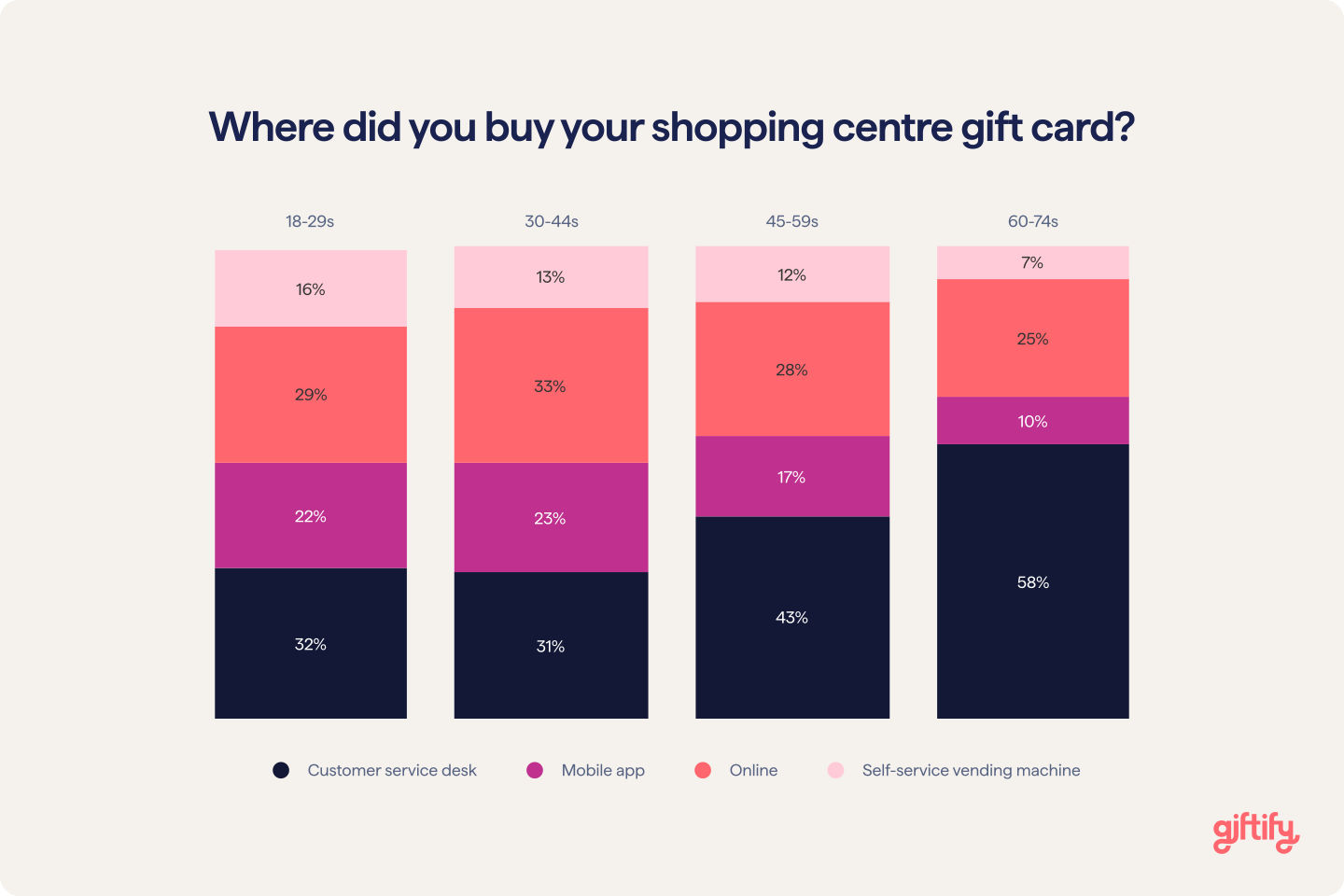
Customer service desks are still the most utilised channel in Austria (49%) and Italy (47%) and the least in the Netherlands (26%) and the UK (28%). Self-service vending machines account for an outsized 34% of sales in Sweden and are also preferred by younger consumers across all markets, while customer service desks skew older.
Despite this proliferation of online sales channels, consumers still prefer gift cards they can hold in their hands, with 58% saying their most recent gift card purchase was for a physical card.
Assessing the digital maturity of different markets
The UK shows the strongest preference for online purchases, digital delivery by email, app use and contactless payments. At the other end, Sweden and Austria appear to lag on digital uptake.
But these consumers are not resistant to digital channels, even if they still have a preference for physical.
In Poland, awareness of shopping centre gift cards is strongly driven by customer service desks and in-store signage, but online advertising and social media remain very important awareness activators.
Repeatedly, we see that consumers are open to digital gift card experiences, even if these are not yet the norm.
In other words, the idea of digital appeals, even if the reality hasn't yet caught up in some markets. Or to put it another way, digital remains a long-term play for canny shopping centres.
Real potential for revenue
Average card load
A significant portion of consumers (39%) typically load between €26 and €50 onto a gift card at purchase.
That is the single largest share, with the remaining split across 20% who add €10-25, 17% choosing €51-75, 15% opting for €76-100, and 7% loading €100 or more.
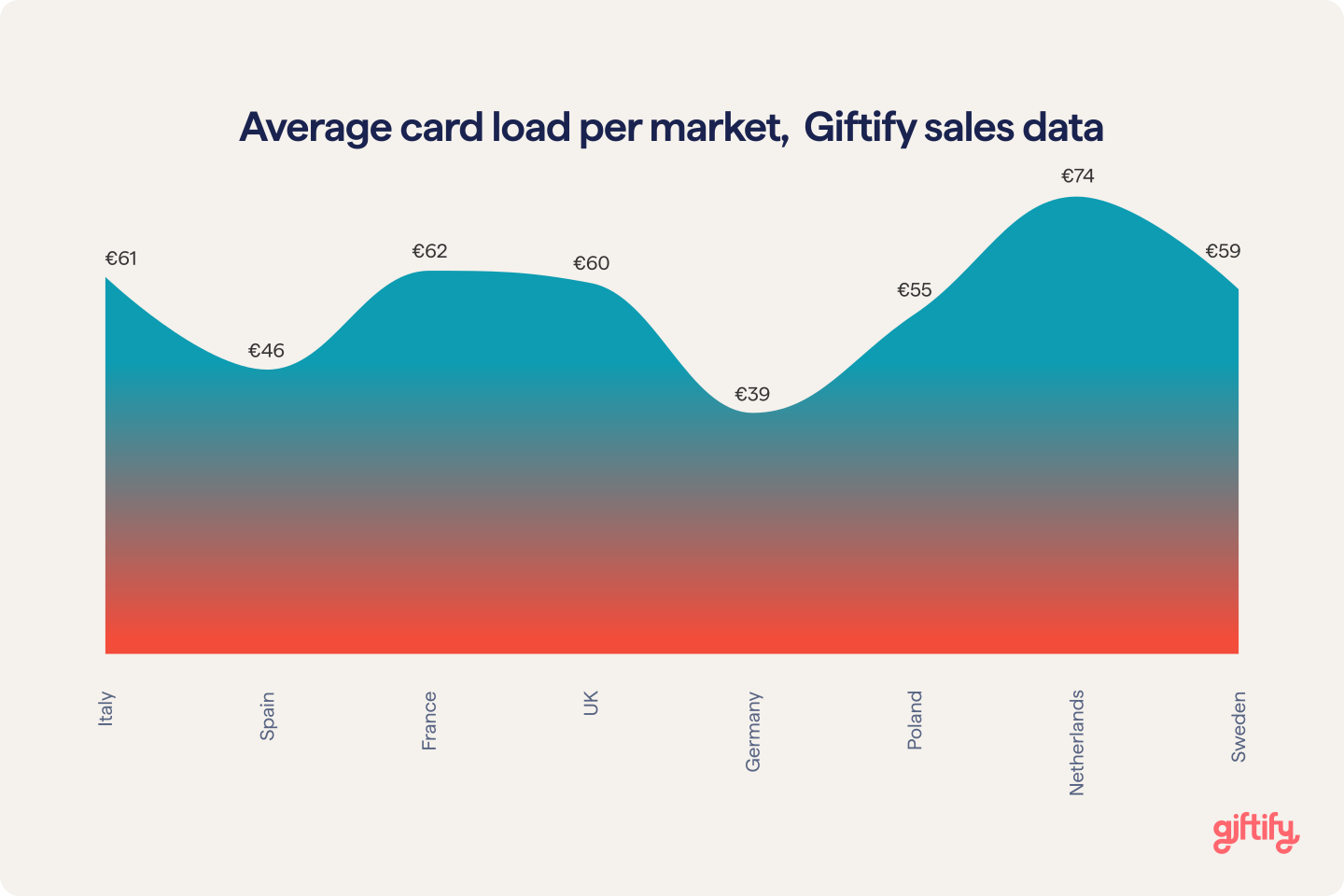
Our internal data on gift card sales and average card load in these markets corroborates this trend.
Spend uplift on gift cards
Nearly a third (29%) of shopping centre gift card users report spending more than €25 above the value of their last card.
Germany (42%), France (39%) and Austria (38%) are most likely to see overspend of this size. Consumers in the UK (17%) and Italy (16%) are the most likely to claim that they did not spend beyond the card value.
While it's not surprising to see a high spend uplift in Germany, given the lower average card load value, France enjoys a noteworthy mix of high card load and overspend.
We see a similar picture in the non-user group, where 29% of respondents said they would be willing to spend more than €25 of their own money on top if they received a €50 euro gift card, and only 18% would be unwilling to spend any more.
Again, Austria (37%), France (33%) and Germany (31%) are among the most willing to overspend by €25 or more.
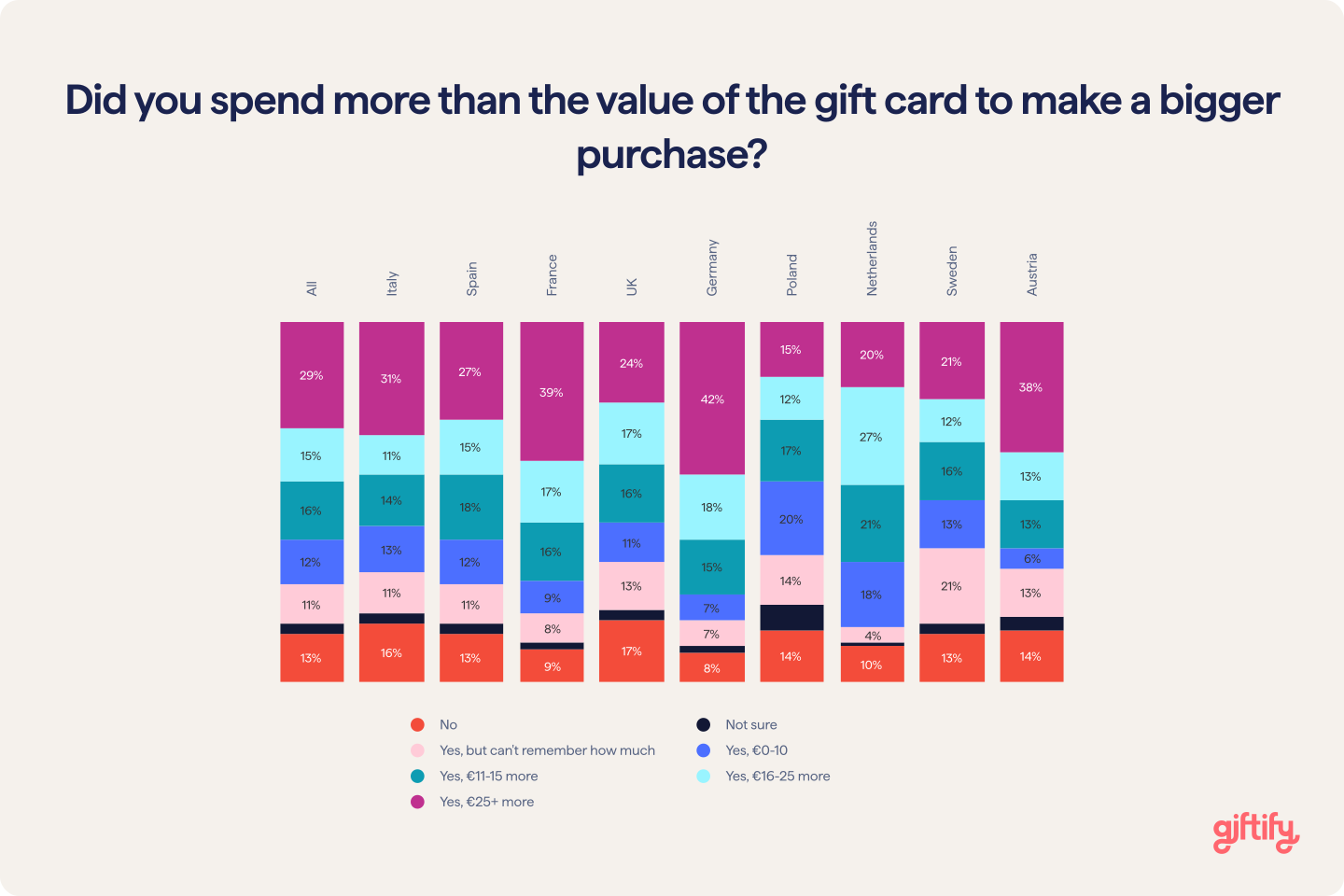
Spending patterns differ by gender
Men are more likely to overspend than women. Some 31% of men will go more than €25 beyond the value of their gift card, compared to 24% of women.
The gap is even bigger in the non-user group, where 34% of men and 24% of women claim they’d hypothetically spend more than €25 beyond a €50 gift card.
This indicates a strong commercial upside for shopping centres and their retailers across both users and non-users.
Purchase frequency drives footfall
It's not just spending uplift that shopping centre gift cards can deliver. Another notable trend observed in the survey was the higher purchase rate of these cards in the UK, Spain and Italy—markets that are less prone to spending beyond the card value than in France, Austria and Germany.
Specifically in the UK, a substantial majority of consumers who have used a shopping centre gift card report purchasing them either "sometimes" (51%) or "often" (34%) over the last year. The 34% figure for "often" is significantly higher than the 20% average observed across the entire survey.
Gift cards are a powerful tool for revenue generation. Data shows that 29% of recipients typically spend €25+ more than the card's initial value, significantly boosting retailer sales and underscoring the financial benefit of a gift card programme.

Self-service and gifting culture
What this means for shopping centres is repeat visits driven by their gift cards. Notably, markets with higher rates of repeat visits also show strong signs of self-use.
Traditionally self-use is more common as a use case for single brand or retailer cards. But 21% of shopping centre gift card users said they have bought a card for themselves, with 39% receiving a gift card from friends or family, 19% from work and 11% from other sources.
Italy (32%) and the UK (31%) show the highest rates of self-use. As we have already seen, they also see the highest frequency of gift card purchases.
This hints at an interesting correlation between markets with fewer barriers to convenient purchase and redemption, and the self-use of shopping centre gift cards.
By contrast, Sweden (6%), Austria (9%) and Germany (11%) are the smallest markets for self-use. This is unsurprising. Given that Austria and Germany lead in overspending, it suggests a stronger culture of gifting in these territories, coupled with less mature digital and online penetration.
It's clear that shopping centres need to think beyond the number of cards sold as a simple benchmark for footfall. Overspend, frequency and purchase convenience are all key contributors to the commercial impact of shopping centre gift cards.
Opportunities for centres
The data outlined in this report leads to a clear set of conclusions that can help shopping centres improve the performance of their gift card programmes.
1. Increase visibility beyond the service desk
The clearest mandate from this research is the need to improve visibility dramatically to drive extra revenue and footfall.
Shopping centres are sitting on a highly desirable product, yet a substantial portion of their local catchment remains completely unaware of it. Centres need to treat their gift card programmes like a primary retail offering rather than a background service.
Moving promotional efforts beyond the customer service desk to include high-impact in-centre signage, targeted local advertising, and clear online coverage is the most direct route to higher sales.
2. Prioritise thorough tenant onboarding
Driving awareness will only convert to sales if consumers feel confident about where they can spend their money.
The data shows that uncertainty around store acceptance is the single biggest point of friction for both buyers and recipients. Shopping centre management must prioritise comprehensive tenant onboarding.
Securing the participation of anchor tenants and ensuring that retail staff across the centre are properly trained to process the cards without hesitation will remove this barrier and elevate the customer experience.
3. Expand physical and online sales channels
While physical sales points remain the bedrock of the market, there is a clear expectation for greater purchasing convenience.
Shoppers want the ability to easily buy cards online ahead of their visit. Expanding sales channels to include a robust e-commerce option, alongside self-service kiosks in high-traffic areas, caters to all demographics.
This is particularly true for the highly engaged 30–44 age group, who heavily value speed and checkout efficiency.
4. Leverage revenue-generating power
Finally, centres must actively leverage the proven revenue-generating power of these cards.
With nearly a third of users spending over €25 more than the card’s face value, the economic benefit to tenant retailers is undeniable.
By positioning the gift card programme to tenants as a tool that drives guaranteed footfall and significantly increases basket sizes, centres can foster stronger retail partnerships.
Encouraging self-use and utilising the cards as rewards for centre promotions will further lock in shopper loyalty and ensure repeat visits across the year.

About the report
Conducted between December 2025 and January 2026, this research involved a quantitative survey of 7,500 respondents across nine key European markets: the UK, France, Germany, Italy, Spain, Poland, the Netherlands, Sweden, and Austria.
Executed by market research specialist Into The Minds on behalf of Giftify, the study utilised nationally representative samples of 500 to 1,000+ per market to ensure a definitive benchmark for the industry.
The survey was structured in two main parts. The initial section focused on general gift card usage, attitudes and awareness of shopping centre gift cards. Following this, consumers were divided into two distinct groups based on their usage level:
- Users: This segment responded to questions specifically about their past purchases and usage of shopping centre gift cards.
- Non-users: This segment was presented with hypothetical scenarios to gauge their potential openness and appetite for these cards.
Supplementing the consumer survey is an analysis of Giftify’s own proprietary data for 2025, covering approximately two million gift card sales and representing a total card load of more than €115 million.
Glossary of terms
- Shopping centre gift cards: Multi-retailer gift cards that are accepted by all or most stores within a specific shopping centre or managed retail destination, offering the consumer high flexibility and choice
- Single-brand or retailer gift cards: Gift cards that are restricted for use within only one specific retail chain or brand, limiting the recipient's choice to that specific inventory
- Users: Consumers who, prior to the survey, already knew that shopping centres offered their own gift card programmes and had previously used one
- Non-users: Consumers who only learned about the existence of shopping centre gift cards through the survey, or were aware but hadn’t used one before
- Spend uplift / Overspend: The additional personal funds a consumer spends at the checkout over and above the face value of the gift card
- Anchor tenants: Major department stores or high-traffic retailers within a shopping centre
- Self-use: The practice of a consumer purchasing a shopping centre gift card for their own personal use rather than as a gift for someone else
Want to download the full free report as a PDF? Click here to get it today


Related posts